The short answer
For outdoor sightseeing in the lowlands, the cooler months are the easier choice. Average daytime highs stay between 65 and 86 °F (18.6 to 30.2 °C) from October to April, and the nights are mild to cool. From May to September the average high is 92 °F (33.2 °C) or more, and in June it reaches 101 °F (38.4 °C).
Rain is not spread evenly. April, May and June are the driest months. July and August bring the most rain, mostly as monsoon thunderstorms. This is a long-term average for the airport weather station, not a forecast for your dates. The Tucson climate table below shows the numbers month by month.
Tucson climate by month
Average daily high, average daily low and normal monthly rainfall for the Tucson airport station, 1991 to 2020, from the National Weather Service. These are averages, not records and not a forecast.
| Month | High | Low | Rain |
|---|---|---|---|
| January | 67 °F (19.2 °C) | 41 °F (4.9 °C) | 0.8 in (21.3 mm) |
| February | 69 °F (20.7 °C) | 43 °F (6.2 °C) | 0.8 in (21.3 mm) |
| March | 76 °F (24.3 °C) | 48 °F (8.9 °C) | 0.6 in (14.2 mm) |
| April | 83 °F (28.3 °C) | 53 °F (11.8 °C) | 0.2 in (6.1 mm) |
| May | 92 °F (33.2 °C) | 62 °F (16.6 °C) | 0.2 in (5.1 mm) |
| June | 101 °F (38.4 °C) | 71 °F (21.7 °C) | 0.2 in (5.8 mm) |
| July | 100 °F (37.9 °C) | 76 °F (24.6 °C) | 2.2 in (56.1 mm) |
| August | 99 °F (37.0 °C) | 75 °F (24.0 °C) | 2.0 in (50.3 mm) |
| September | 95 °F (35.1 °C) | 70 °F (21.3 °C) | 1.3 in (33.5 mm) |
| October | 86 °F (30.2 °C) | 59 °F (15.0 °C) | 0.7 in (17.0 mm) |
| November | 75 °F (23.9 °C) | 48 °F (8.8 °C) | 0.6 in (14.2 mm) |
| December | 65 °F (18.6 °C) | 40 °F (4.7 °C) | 1.0 in (24.4 mm) |
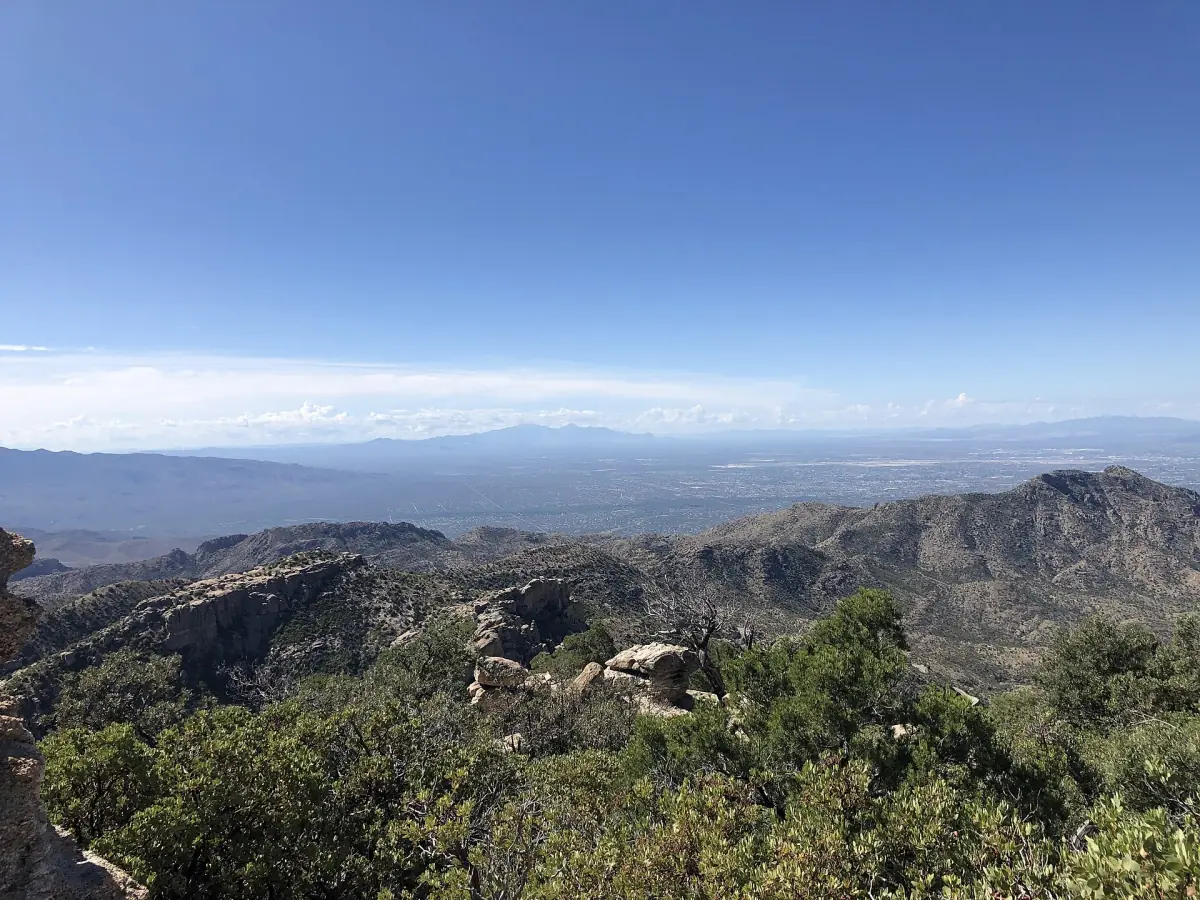
The figures describe the airport at the southern edge of the city. They do not apply unchanged to Mount Lemmon, which climbs from desert to pine forest, so check a forecast for the elevation you plan to visit. See the Mount Lemmon page for the road and the lift.
Tucson tours by season
Desert, canyon and day trips from Tucson, with live prices and availability. Early starts keep summer outings comfortable.
What each season means for your trip
Pick the months that match what you want to do.
October to April: the easiest months for sightseeing
Highs run from 65 to 86 °F (18.6 to 30.2 °C) and rain is light. Hiking at Sabino Canyon, driving the loops of Saguaro National Park and walking the grounds of a museum are all comfortable. Nights drop to 40 to 59 °F (4.7 to 15.0 °C), so pack a jacket for the evening.
Sabino Canyon →May and June: dry and very hot
Little rain falls, but highs of 92 to 101 °F (33.2 to 38.4 °C) make midday walks hard work. Start early, carry plenty of water and plan indoor stops for the afternoon. Both months are drier than July, yet hotter in the day.
July to September: the monsoon
Highs stay at 95 to 100 °F (35.1 to 37.9 °C), nights are warm, and storms build in the afternoon. July and August are the wettest months. Plan outdoor time for the morning and keep a flexible afternoon.
The monsoon
The National Weather Service defines the monsoon period as June 15 to September 30.
Not every day is rainy. Thunderstorms, lightning, dust storms and flash floods are possible, and a storm can hit a canyon even when the sky above you is clear. Stay away from flooded roads and dry stream beds. If a flash flood warning is issued, move to higher ground.
The Sabino Canyon shuttle shows how this plays out in practice. The Bear Canyon shuttle is usually suspended when the creek runs high, and the main Sabino shuttle uses a replacement route. Saturday night tours at Sabino run in summer and early autumn and can be cancelled because of weather. Check the operator before you drive out.
The park service also points to flash flood risk in Saguaro National Park in late summer. Check the forecast and the current conditions page before you set out on a trail.
Heat safety
Advice from the National Park Service for Saguaro National Park, useful anywhere in the desert.
Water
On hot summer days the park service suggests about 1 US quart (0.95 liter) of water per hour of hiking, plus electrolytes or salty snacks. Turn back when half of your water is gone. This is a rule of thumb, not an amount that fits every person.
Timing
In summer, the park service recommends activity before 10 am or after 4 pm. The same logic works for Sabino Canyon, the Desert Museum grounds and any trail.
Fixed limits
The guided tours at Mission San Xavier del Bac do not run when the temperature is above 95 °F (35 °C). Plan a second stop for those hours.
Mission San Xavier →How the seasons change opening hours
Several places shorten their day in summer. Check the current timetable before you go.
| Place | October to May | June to September |
|---|---|---|
| Arizona-Sonora Desert Museum | 8:30 am to 5:00 pm daily | 7:30 am to 4:00 pm, with Saturday evenings to 10:00 pm in June to August |
| Saguaro National Park visitor centers | 9:00 am to 5:00 pm | 8:00 am to 4:00 pm |
| Kartchner Caverns Big Room tour | Offered from Oct 15 to Apr 15 | – |
The Big Room is closed in summer while the cave bats raise their young. The state park gives the season as October 15 to April 15 on its tour page, so confirm the exact dates for your visit. The Desert Museum and Kartchner Caverns pages have the full details.
Which month for which plan
A short guide, based on the averages above rather than a promise of weather.
Gem show in winter
The big show runs from late January to mid February, when highs average 67 to 69 °F (19.2 to 20.7 °C) and lows are 41 to 43 °F (4.9 to 6.2 °C). Bring layers for early mornings. See the Tucson gem show page for dates.
Hiking and loop drives
November to March gives the mildest daytime temperatures for trails. Spring is warm by late April, with highs around 83 °F (28.3 °C).
Planning beyond Tucson
If you add Sedona, the Grand Canyon or other places, the best time to visit Arizona covers the state as a whole, where elevation changes the picture a lot.
Tucson weather: frequently asked questions
What is the best time to visit Tucson?
For most outdoor plans, November to April is the easiest period, with highs of 65 to 76 °F (18.6 to 24.3 °C) from November to March and light rain. October is also pleasant, with an average high of 86 °F (30.2 °C). This is a judgment based on the averages, not an official recommendation.
How hot does Tucson get in summer?
The average high reaches 101 °F (38.4 °C) in June and stays between 95 and 100 °F (35.1 to 37.9 °C) in July to September. These are averages, so individual days can be hotter. Start outings early and carry water.
When is the monsoon in Tucson?
The National Weather Service uses June 15 to September 30. July and August are the wettest months, with about 2.2 and 2.0 inches (56 and 50 mm) on average. Storms usually arrive in the afternoon and evening.
Is it cold in Tucson in winter?
Days are mild, with highs of 65 to 69 °F (18.6 to 20.7 °C) in December to February. Nights fall to 40 to 43 °F (4.7 to 6.2 °C) on average, so bring a warm layer for mornings and evenings.
Does it rain much in Tucson?
Not much. April, May and June each have about 0.2 inches (5 to 6 mm) of rain on average. Rain comes mainly in July and August and in smaller amounts in winter.
Does the airport weather apply to Mount Lemmon?
No. The table is for the airport station. The byway climbs from the desert to pine forest at nearly 9,000 ft (2,743 m), so check a forecast for the elevation you will visit.